
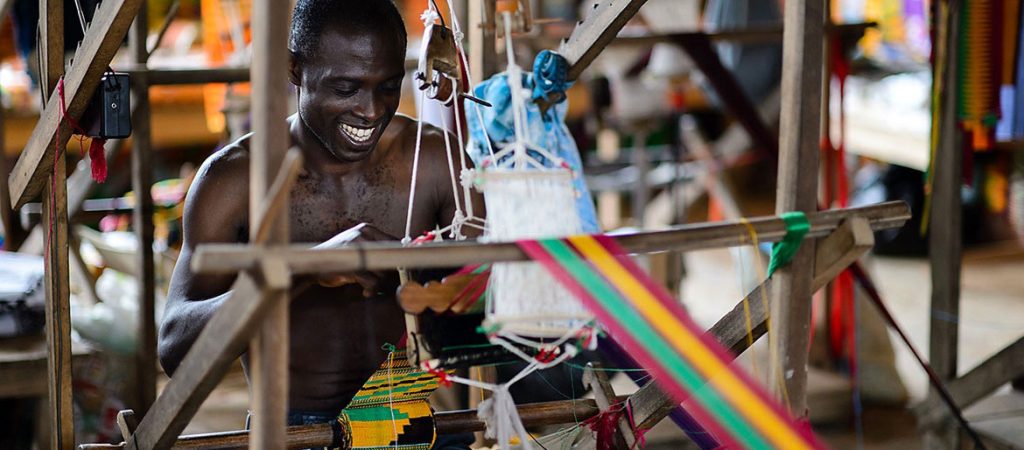
Ghanaian textiles are not one tradition with one history. They are a collection of distinct practices shaped by community, language, ecology, trade, authority and artistic invention. Kente weaving among Asante communities such as Bonwire and Adanwomase and among Ewe communities including Agotime and Kpetoe demonstrates this diversity. The traditions share strip-weaving methods, yet their patterns, naming systems, colour choices and social histories should not be collapsed into a single account.
In 2024, UNESCO inscribed the craftsmanship of traditional woven kente on the Representative List of the Intangible Cultural Heritage of Humanity. The inscription recognises more than a finished cloth. It recognises knowledge passed through families, master weavers, apprenticeships and educational institutions. It also recognises the cloth as a means of communication whose names draw on proverbs, sayings and social situations. That recognition creates opportunity, but it also gives Ghana a responsibility to protect the communities and skills that make kente a living heritage.
The northern smock, widely known as fugu or batakari, carries a different but equally important history. Narrow woven strips are joined into garments associated with northern identity, leadership, endurance and public dignity. Production links cotton and yarn traders, dyers, weavers, tailors and retailers in communities across the northern savannah and in urban markets. Contemporary designers now adapt smock cloth into jackets, dresses, bags and formal wear, extending its appeal beyond ceremonial use.
A February 2026 engagement between government and smock producers identified practical obstacles: difficulty obtaining cotton and thread, limited finance and weak distribution. These concerns show why heritage cannot survive through publicity alone. If producers cannot secure raw materials, maintain equipment, train apprentices and reach markets, national pride will not translate into stable livelihoods.
Adinkra cloth adds another visual language. Its historical development links the Gyaman tradition to Asante practice, while communities such as Ntonso remain associated with stamping cloth using carved symbols and dark dye traditionally prepared from badie bark. Symbols communicate ideas about God, authority, courage, unity, learning, mortality and ethical conduct. Batik and tie-dye traditions, practised in training centres, workshops and households across Ghana, further demonstrate how cloth can carry both cultural meaning and everyday enterprise.
The main risks are imitation without attribution, falling apprenticeship numbers, dependence on imported yarn and dyes, and the sale of industrial prints as though they were handwoven or hand-stamped originals. Ghana needs community-based registers of designs and makers, collective marks that identify authentic origin, stronger action against deceptive labelling and partnerships that pay artisans fairly when their motifs are used commercially.
Heritage tourism can support this work when it is built around real production communities. Visitors should be able to observe weaving, learn the meaning of designs, purchase verified products and understand how income returns to the makers. Schools and universities should document techniques with the consent of custodians, while design students should learn to innovate without erasing origin. The objective is not to freeze tradition, but to ensure that innovation grows from knowledge, credit and fair economic relationships.