
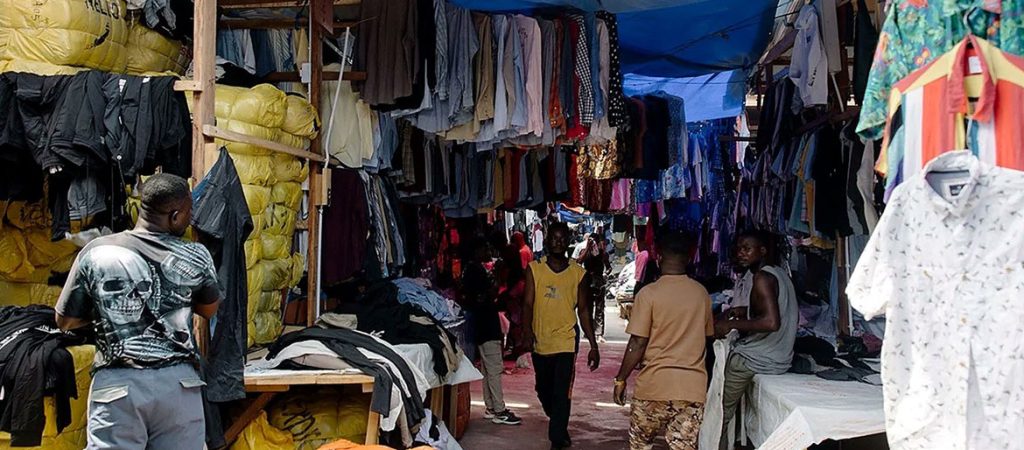
Ghana’s strongest fashion images can hide a difficult industrial reality. The Ghana Investment Promotion Centre’s 2022 manufacturing report, using 2020 trade data, recorded about US$1.1 billion in textile imports against approximately US$18 million in textile exports. It also reported around US$182 million in used-clothing imports. The year was affected by the COVID-19 pandemic and the figures should not be treated as a current balance sheet, but the scale of the gap exposes long-standing dependence on imported textiles and clothing.
Secondhand clothing requires careful analysis. Kantamanto and related markets provide livelihoods for importers, retailers, repairers, cleaners, transporters and upcyclers, while giving consumers access to affordable clothing. The problem should not be reduced to blaming traders or buyers. Ghana must confront the quality of imported goods, the waste left after sorting, the pressure on local production and the unequal global system that transfers the disposal burden of clothing to communities with limited waste infrastructure.
Local manufacturers face high energy and finance costs, imported machinery, inconsistent raw-material supply and competition from low-priced goods. Producers of fugu have recently identified access to cotton, thread, finance and distribution as continuing constraints. Textile mills and printers must also compete with copied designs and imported fabrics sold through informal channels. Tailors and designers often work without long-term capital, insurance, reliable contracts or business data.
The sector is fragmented. Cultural policy may promote heritage, trade policy may focus on manufacturing, tourism may support events, education may train students and local government may manage markets, yet the value chain does not operate in separate ministries. Ghana needs a coordinated cotton-to-clothing and craft-to-market strategy with responsibilities, targets and annual reporting.
Raw-material development should connect northern cotton production, spinning, weaving, dyeing, printing and garment manufacture. Where domestic production cannot immediately meet demand, import policy should still distinguish inputs needed by local producers from finished goods that compete directly with them. Finance must include equipment leasing, working capital, patient loans and purchase-order support rather than expecting small creative businesses to survive on short-term consumer credit.
Standards and intellectual property are equally important. Clear labelling should distinguish handwoven kente from industrial kente-inspired print, locally printed fabric from imported cloth, and Ghana-made garments from imported products carrying local branding. Designers need practical access to industrial-design registration, contracts and enforcement. Producers also need measurement standards, colour consistency, safe dyes, durable components and quality testing.
The environmental response should reward repair, upcycling, fibre recovery and responsible disposal while supporting local production that is designed to last. Municipal authorities, market associations, importers, manufacturers and waste innovators must share responsibility. Current national data should track production, jobs, imports, exports, enterprise survival, wages, regional participation and textile waste. Without evidence, Ghana will continue to celebrate fashion without knowing whether the underlying industry is becoming stronger.