
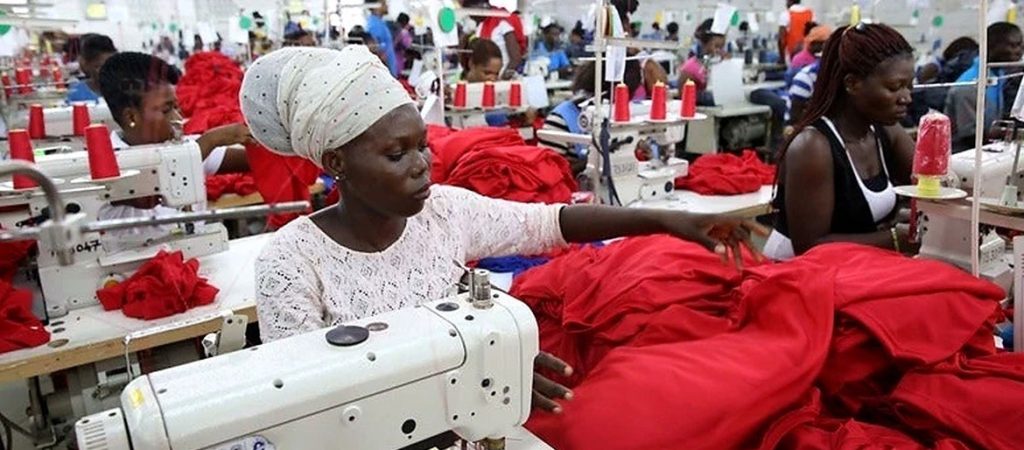
Ghana’s contemporary fashion sector extends far beyond the individual designer. It includes pattern cutters, sample makers, tailors, industrial machinists, textile printers, footwear producers, stylists, models, photographers, make-up artists, event organisers, retailers, exporters, technology providers and training institutions. The strength of the industry depends on how well these roles connect.
Runway events and celebrity appearances give designers visibility, but visibility becomes development only when it produces orders, contracts, jobs and repeatable production. Ghanaian fashion has gained attention through national ceremonies, music, film, festivals, diaspora events and fashion weeks. Kente, smock cloth, African prints and beadwork give the country a recognisable visual identity, but international interest must be converted into value retained by Ghanaian workers and businesses.
The garment-manufacturing segment offers a different scale of opportunity from bespoke tailoring. Factories can supply uniforms, workwear, casual clothing and export orders while employing cutters, machine operators, quality controllers, supervisors and logistics staff. Ghana’s position within AfCFTA, its ports, established free-zone companies and reputation for political stability provide advantages, but buyers require consistent quality, competitive pricing, ethical labour practices and dependable delivery.
The gap between creative design and industrial production remains significant. Many talented businesses can make a strong sample but cannot reproduce it in hundreds of units with consistent sizing and finishing. Shared production centres, professional pattern libraries, grading technology, equipment leasing and trained production managers would help small labels scale without purchasing an entire factory.
Public procurement can create dependable demand. School uniforms, hospital clothing, hospitality wear, security garments, conference materials and official gifts should become carefully structured opportunities for Ghanaian textile, garment and accessory producers. Local-content requirements must be matched with transparent contracts, realistic payment schedules, quality standards and measures that prevent imported finished goods from being relabelled as locally made.
Cultural diplomacy must also become commercial diplomacy. Embassies, tourism missions, international festivals and diaspora organisations can present curated Ghanaian collections and connect producers to buyers. Designers should receive support for lookbooks, export documentation, intellectual-property advice, market research and participation in trade shows. Models and photographers should be credited and paid as part of the same professional system.
Training must reflect the full range of careers. Fashion schools often attract students to design and sewing, but the industry also needs textile technologists, machinists, pattern engineers, merchandisers, production accountants, e-commerce managers and sustainability specialists. A credible pathway should connect secondary and vocational education, apprenticeships, tertiary institutions and industry placements. The result should be a workforce capable of carrying Ghanaian creativity from concept to market.