
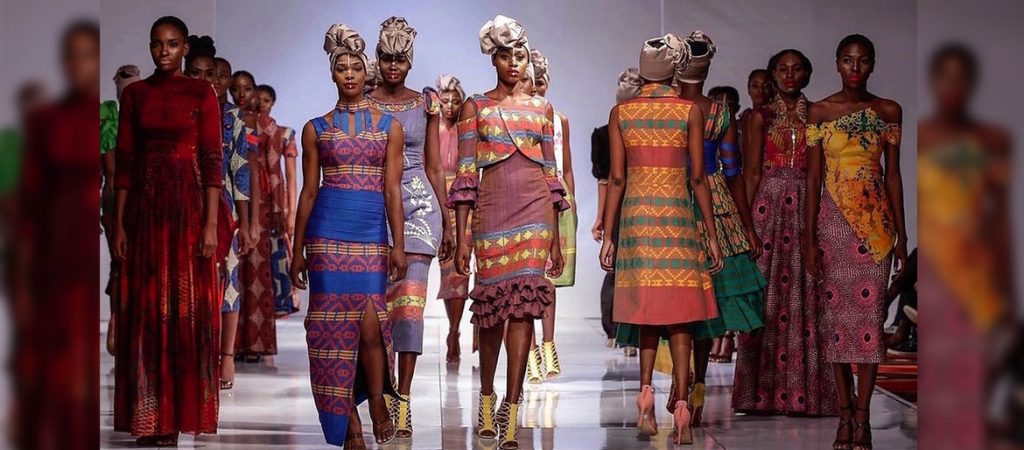
November’s Black Star Experience theme, Fashion, Textiles and Accessories Month, places one of Ghana’s most visible forms of culture within a national development conversation. Clothing is often treated as personal taste, but in Ghana it has long communicated origin, status, occupation, belief, age, ceremony and political identity. Kente, fugu, adinkra cloth, kaba and slit, beads, sandals, leatherwork, woven baskets and gold ornaments carry knowledge that cannot be reduced to colour and decoration.
A cloth worn at a funeral may communicate mourning and family affiliation. Beads may mark puberty, marriage, chieftaincy or spiritual responsibility. A chief’s regalia brings together textiles, gold, leather and symbolic objects in a carefully ordered public language. The smock worn at a national ceremony can connect northern craftsmanship to the story of Ghana itself. Fashion therefore sits at the meeting point of heritage, social memory and contemporary life.
It is also an economic system. The value chain begins with cotton, yarn, dyes, recycled glass, leather, metals and other inputs. It continues through spinning, weaving, printing, beadmaking, tailoring, footwear production, design, modelling, photography, retail, events, logistics, tourism and digital marketing. Money spent on a Ghanaian garment can support many hands before the finished product reaches the wearer.
At a national fashion and beauty event in December 2025, the Ministry of Tourism, Culture and Creative Arts reported an estimated contribution of about US$2.42 billion, roughly three per cent of gross domestic product, with more than 25,000 formal jobs and over 100,000 people supported in the informal economy. These figures were presented as sector estimates rather than a detailed statistical account, but they show the scale of activity that public policy must take seriously. They also reveal the need for Ghana to establish a regular and transparent statistical baseline for fashion, textiles and accessories.
The central challenge is not a shortage of creativity. Ghana has designers, tailors, weavers, beadmakers, footwear producers, models and cultural custodians with knowledge and ambition. The weakness lies in the systems around them: inconsistent access to finance, dependence on imported inputs, limited production capacity, weak market data, uneven quality control, design copying, inadequate distribution and poor links between training and employment.
Fashion Month should therefore be judged by what it helps Ghana to build. Celebration is necessary because it strengthens pride and visibility, but celebration must lead to documentation, investment, skills, production, market access and environmental responsibility. The purpose of this publication is to examine the cultural foundations of Ghanaian fashion, the gaps holding the sector back and the practical responsibilities required to turn heritage into dignified work and national value.