
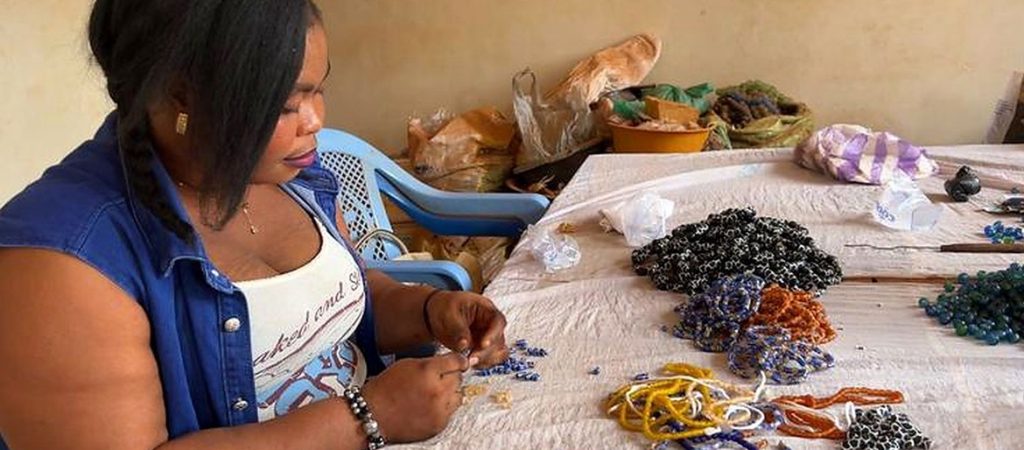
Accessories in Ghana are cultural texts. Beads, gold ornaments, leather sandals, hats, bags, waist adornments, brass objects and woven baskets can reveal social position, spiritual meaning, stage of life and community belonging. Their significance lies not only in the object but also in the knowledge governing when it is worn, by whom and for what purpose.
Krobo beadmaking in the Eastern Region is one of the clearest examples of heritage becoming enterprise. Artisans transform glass into beads through crushing, moulding, firing, polishing and painting. Beads are used in everyday adornment, marriage, chieftaincy and ceremonies such as Dipo. They also enter contemporary jewellery and international fair-trade markets. The use of recycled glass gives the craft particular relevance to conversations about sustainability and circular design.
In Asante royal culture, beads and gold ornaments operate within systems of authority and ancestral connection. Among Ga-Dangme, Ewe and other communities, waist beads, bracelets and necklaces carry meanings linked to beauty, maturity, family and ritual. Ghana’s accessory heritage also includes northern leatherwork, hand-made sandals, woven hats and Bolgatanga baskets. These practices should be named accurately instead of being marketed under the vague label of African craft.
The enterprise possibilities are wide. A beadmaker may supply jewellery designers, cultural performers, hotels, museums, gift shops and diaspora retailers. A leatherworker can move from occasional orders into standardised footwear and bags. A basket cooperative can supply home-decor markets, tourism outlets and export buyers. Accessories are often easier to transport and sell internationally than full garments, making them an important entry point for small creative businesses.
Yet many producers remain trapped at the lowest-value stage of the market. Inconsistent finishing, weak packaging, limited access to design services, irregular supply of inputs and poor online visibility reduce prices and repeat orders. Individual artisans may not have the equipment to test clasps, standardise sizes, photograph products, process digital payments or meet large orders within fixed deadlines.
A development response should create shared craft facilities with kilns, polishing equipment, leather tools, testing support and safe workspaces. Cooperatives and producer associations can combine orders without erasing individual creativity. Product cards can explain origin and care without turning sacred knowledge into marketing content. Packaging, branding and digital catalogues should present makers as skilled producers rather than anonymous suppliers.
Cultural institutions, traditional authorities and artisans must also agree on boundaries. Some objects are appropriate for open commercial use; others carry restrictions connected to office, ritual or sacred responsibility. Respecting those differences protects heritage and strengthens the credibility of Ghanaian products. When accessories are produced with cultural accuracy, modern design and reliable quality, they create income while giving Ghana a distinctive presence in global fashion.