
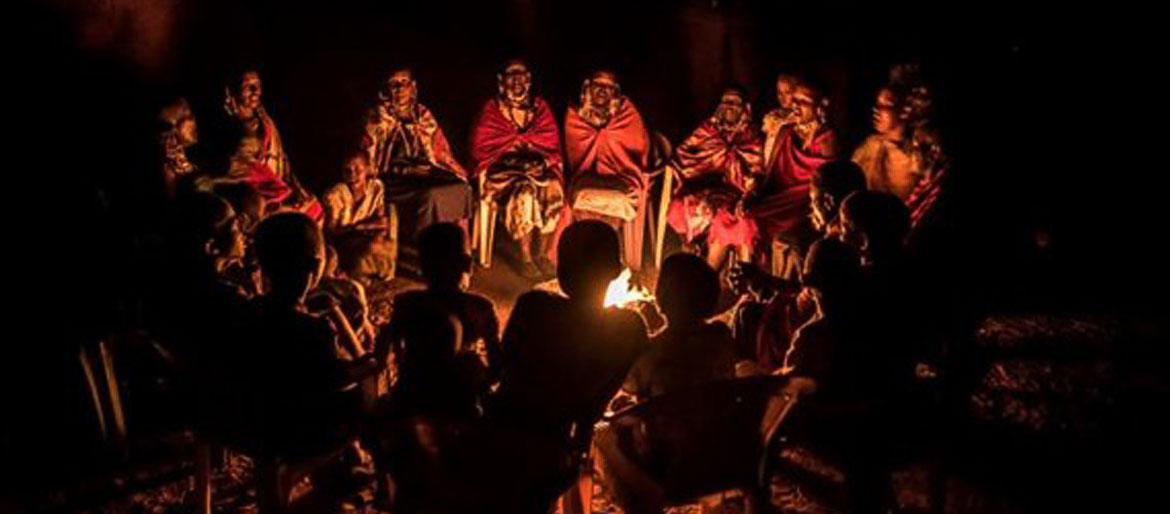
Storytelling remains one of the most powerful and enduring methods of transmitting culture across generations. In Ghanaian society, storytelling is not merely a recreational activity; it is a structured mechanism for education, identity formation, moral development, and social cohesion. Through narrative, communities pass on collective memory, reinforce shared values, and sustain continuity between the past, present, and future.
Storytelling strengthens language retention and linguistic competence. When stories are told in indigenous languages, they preserve vocabulary, idiomatic expressions, proverbs, tonal patterns, and oral aesthetics that may otherwise diminish over time. This process supports language sustainability and reinforces cultural pride. In multilingual societies such as Ghana, storytelling also enhances cognitive flexibility and cross-cultural understanding.
Beyond language development, storytelling functions as a moral and civic education tool. Traditional narratives often address themes such as responsibility, leadership, justice, humility, courage, cooperation, and consequences. Through characters and symbolic representation, listeners are guided to reflect on ethical behaviour and social accountability. In this way, storytelling shapes behavioural norms and strengthens communal bonds.
Storytelling also deepens historical consciousness. Oral narratives preserve genealogies, migration histories, traditional governance systems, and significant communal events. They ensure that historical knowledge is not lost but internalized through repetition, performance, and communal participation. By listening to and retelling stories, younger generations gain awareness of their heritage and develop a sense of belonging.
During Literacy and Literary Month, storytelling initiatives are designed as intentional cultural and educational interventions. These initiatives seek to preserve oral narratives and folklore, promote indigenous languages, encourage intergenerational dialogue, and enhance comprehension and attentive listening skills. In educational contexts, storytelling improves narrative sequencing ability, vocabulary acquisition, imagination, and critical interpretation. It also strengthens empathy by allowing listeners to engage with diverse experiences and perspectives.
Importantly, storytelling extends beyond spoken narration. Forms of indigenous communication such as drum language are understood within this storytelling framework. Drum language, historically used to convey messages across distances and communities, mirrors the tonal and rhythmic structures of spoken language. It represents an indigenous literacy system grounded in sound, rhythm, symbolism, and collective understanding. Through drumming, praise poetry, and ceremonial communication, meaning is transmitted in culturally coded forms that require interpretation and shared knowledge.
By sitting drum language within storytelling, the National Commission on Culture affirms that literacy is not confined to written text alone. Literacy includes the ability to interpret symbolic systems, understand narrative structure, and engage meaningfully with cultural communication forms.
Through storytelling initiatives, Ghana reinforces its indigenous knowledge systems while promoting literacy in both traditional and contemporary contexts. Storytelling remains a bridge between generations, a vehicle for cultural preservation, and a foundational element of national identity.