
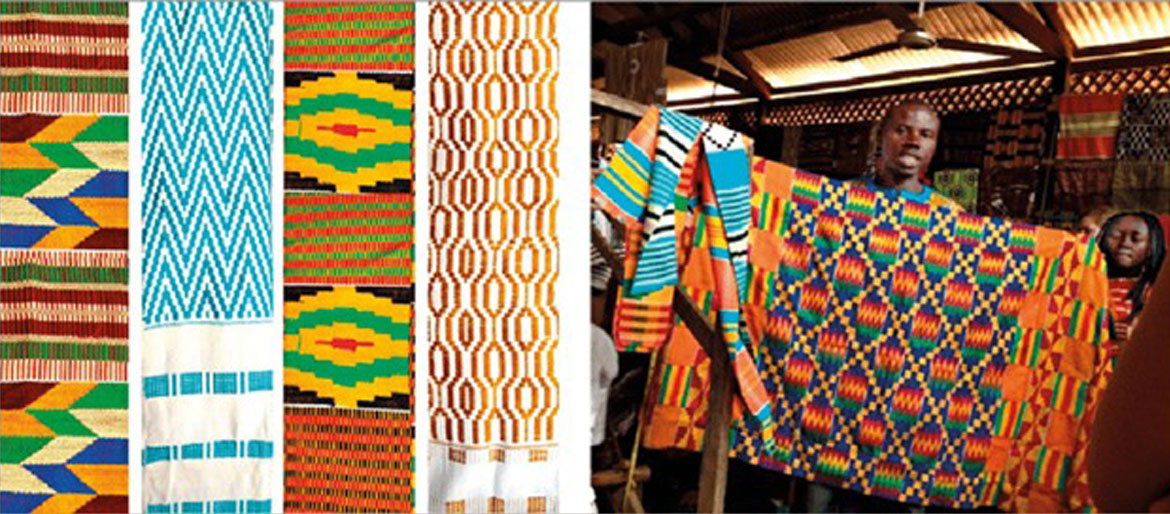
In the Ashanti and Volta Regions, weaving evolved into an art form that transcended time and space. Among the most celebrated of Ghana’s textile traditions is the Kente cloth, a masterpiece of colour, geometry, and symbolism. Kente is not merely fabric; it is a visual language that speaks of wisdom, courage, unity, and heritage. It represents the pinnacle of Ghanaian weaving artistry, where each thread is carefully planned, dyed, and interlaced to form a story that continues to resonate across generations.
Kente originated among the Ashanti and Ewe people, who each developed distinct yet related traditions of weaving. The Ashanti legend tells of two brothers from Bonwire who learned the art of weaving by observing how a spider spun its web. Inspired by nature’s design, they returned to their village and created the first woven strip, marking the birth of Kente. The Ewe, on the other hand, adapted their own designs, infusing them with intricate motifs and subtle variations that reflected regional values and beliefs.
The Kente cloth became a royal treasure, reserved for kings, queens, and high-ranking leaders. In Ashanti culture, it was worn only during sacred ceremonies, festivals, and important state functions, symbolizing the authority and divinity of the wearer. Its production was considered a sacred duty, requiring patience, precision, and spiritual discipline. Each strip was woven on a traditional loom, and the process could take weeks or even months depending on the complexity of the design.
The brilliance of Kente lies not only in its beauty but in its meaning. Every pattern and every colour tells a story. Gold signifies royalty, wealth, and spiritual purity. Blue represents peace, harmony, and love. Black embodies maturity and the strength of the ancestors. Green symbolizes renewal, growth, and fertility. Red stands for sacrifice and struggle, while white reflects purity and victory. Together, these colours weave a moral code, reminding Ghanaians of their values, history, and destiny.
Some of the most well-known Kente designs carry profound philosophical and historical messages. Adweneasa, meaning “I have exhausted my skills,” represents creativity, excellence, and mastery. It is a statement of human achievement, showing that one has done their utmost in pursuit of perfection. Fathia Fata Nkrumah, created in honour of Ghana’s first president, Dr. Kwame Nkrumah, and his Egyptian wife, Fathia, symbolizes unity and cross-cultural love. Other designs such as Sika Fre Mogya (“Money attracts blood relations”) and Emaa Da (“It has not happened before”) capture timeless truths about human life, relationships, and destiny.
Beyond the royal courts, Kente has evolved into a national emblem, proudly worn by people of all backgrounds. It graces presidential inaugurations, weddings, graduations, and global fashion runways. Today, it stands as one of Ghana’s most powerful cultural exports — a symbol recognized around the world. Designers and artisans continue to reinterpret its motifs in contemporary styles, integrating Kente into jackets, gowns, footwear, and even digital prints while retaining its cultural depth and authenticity.
Through Kente, artisans have transformed thread into poetry and design into philosophy. Each cloth is not just a garment but a statement of identity, a record of collective memory, and a living testimony to the creativity of the Ghanaian people. The Kente tradition reminds us that fashion is more than appearance; it is wisdom woven into colour and pattern — a story told without words yet understood by all who cherish Ghana’s cultural soul.