
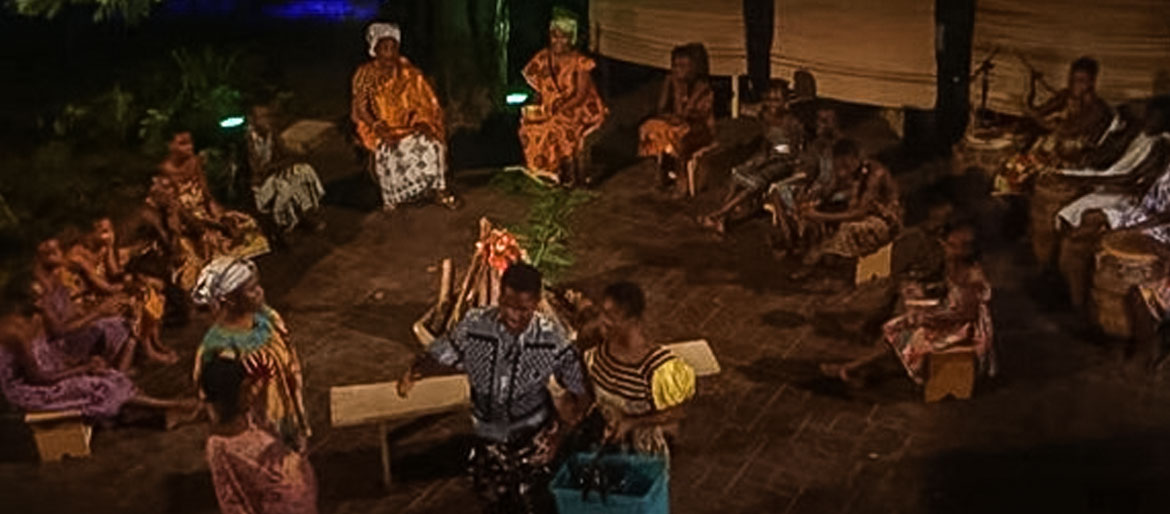
Ghana’s literary tradition is profoundly rooted in oral systems of knowledge transmission that predate colonial contact and the establishment of formal educational institutions. Long before printed books, libraries, and structured curricula became widespread, Ghanaian communities relied on carefully developed oral frameworks to preserve history, transmit governance systems, reinforce ethical standards, and sustain cultural identity. These systems were not informal or incidental; they were deliberate, structured, and socially regulated mechanisms of education and cultural continuity.
Through storytelling, proverbs, poetry, praise songs, dirges, folktales, and dramatic performance, communities encoded collective wisdom and institutional memory. Elders, griots, court linguists, and traditional leaders functioned as custodians of knowledge. Their role extended beyond narration; they interpreted history, explained social norms, mediated disputes, and preserved genealogies. In this context, oral literature operated as an archive of societal experience and an instructional framework for future generations.
The Anansesem tradition, among others, exemplifies this indigenous pedagogical system. Anansesem stories were layered with symbolism and moral lessons that taught responsibility, accountability, intelligence, humility, and communal values. Through narrative structure and metaphor, communities address complex themes such as leadership ethics, social justice, cooperation, and consequence. These stories functioned as cultural textbooks, shaping behaviour and reinforcing social cohesion.
Importantly, oral literature was not merely entertainment. It was an integrated system of education, governance, and identity formation. Proverbs distilled philosophical insights into concise expressions of wisdom. Praise poetry preserved political legitimacy and historical continuity. Ritual performance reinforced communal belonging. Together, these forms constituted an indigenous literacy system grounded in listening, memory, interpretation, and performance.
With the emergence of formal literary scholarship in the twentieth century, Ghanaian intellectuals and cultural pioneers began translating this rich oral heritage into written literature and academic discourse. Figures such as Efua Sutherland and Professor Kofi Awoonor played pivotal roles in documenting, adapting, and analyzing oral traditions within modern literary frameworks. Their contributions ensured that indigenous narratives were not displaced by colonial literary models, but rather integrated into contemporary education and scholarship.
This transition from oral to written expression did not replace tradition; it expanded its reach. Written literature enabled Ghanaian stories to circulate beyond geographic and generational boundaries, while maintaining cultural authenticity. Academic analysis further legitimized oral traditions as intellectual systems worthy of scholarly engagement.
Today, Ghana’s literary ecosystem reflects this dual heritage. Written novels, plays, and poetry coexist with theatre, spoken word performance, storytelling festivals, and digital platforms. Contemporary authors and performers continue to draw from indigenous motifs, linguistic rhythms, and narrative patterns rooted in oral tradition. Digital storytelling, podcasts, and performance poetry represent modern extensions of ancestral communication systems.
Literacy and Literary Month therefore acknowledges that Ghana’s literary strength lies not in the abandonment of oral systems, but in the integration of oral and written traditions. By recognizing this continuity, the National Commission on Culture reinforces the importance of preserving indigenous knowledge while embracing modern literary innovation.
This integrated approach ensures that Ghana’s cultural identity remains grounded in its heritage while evolving to meet the demands of a global knowledge society.