
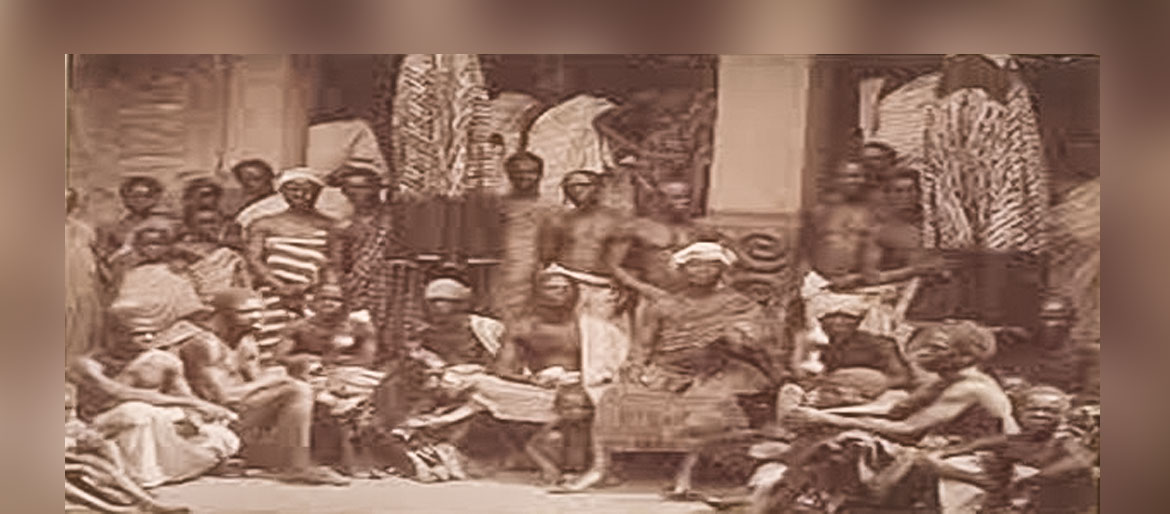
The 15th century witnessed a major transformation along the Accra Plains with the rise of the Ayawaso Kingdom, also known as Great Accra. This state represents one of the earliest examples of urban political organization in southern Ghana.
Tradition attributes its founding to Ayi Kushi, who is credited with unifying dispersed Ga Dangme groups into a centralized polity. Ayawaso’s governance combined political authority with spiritual legitimacy, reflecting a system in which leadership was deeply tied to religious institutions and ancestral traditions.
Strategically located inland near present day Pokuase, Ayawaso occupied a crucial position between the forest interior and the Atlantic coast. This location enabled it to control key trade routes, acting as an intermediary between inland producers and coastal exchange points where European merchants had begun to establish a presence. Goods such as gold, ivory, and agricultural products moved through its territory, strengthening its economic and political influence.
Ayawaso did not exist in isolation. It formed part of a broader network of Ga Dangme and Adangme states across the Accra Plains, including Ladoku, Shai, Krobo, and Ada. These states maintained varying degrees of autonomy while participating in shared systems of trade, culture, and diplomacy. This interconnected regional system fostered both cooperation and competition, shaping the political landscape of southern Ghana.
The stability of Ayawaso was disrupted in the late 17th century during the expansion of the Akwamu Empire. Between approximately 1677 and 1680, Akwamu forces defeated and destroyed Ayawaso, leading to a significant transformation in Ga settlement patterns. The Ga people subsequently migrated toward the coast, where they established new communities, most notably Ga Mashie, which remains the historical core of modern Accra.
This movement from inland capital to coastal settlement is a defining moment in Ga history. It reflects both adaptation and continuity, as political identity, cultural practices, and social structures were preserved even in the face of displacement.
In the broader context of the Black Star Experience theme of History and Diaspora, the story of Ayawaso resonates deeply. It mirrors wider African experiences of migration, disruption, and renewal. Just as communities within Ghana relocated and rebuilt, so too did millions of Africans across the Atlantic carry their identities, traditions, and resilience into new worlds, shaping cultures far beyond the continent.