
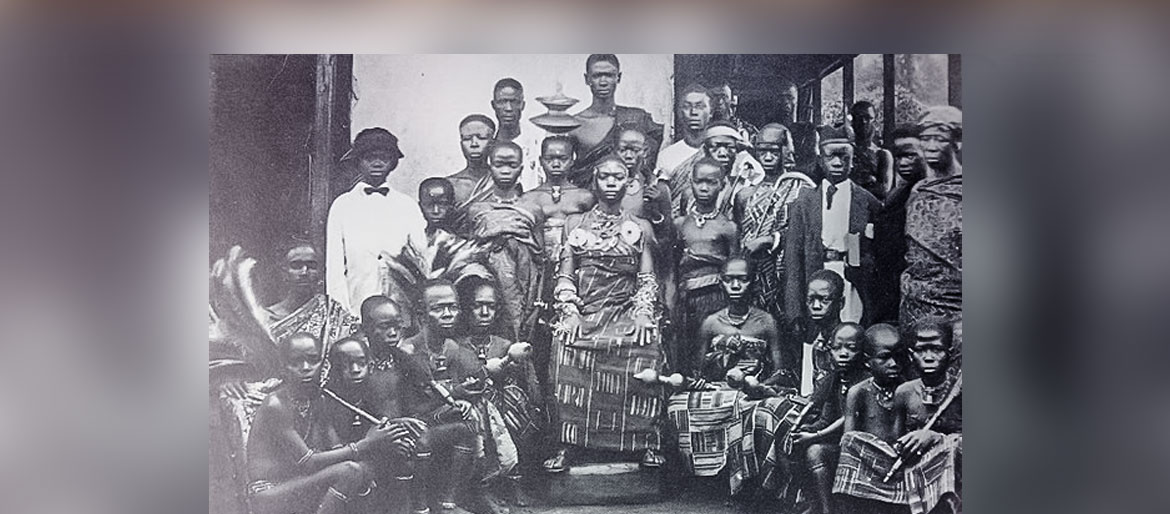
The rise of the Akwamu Empire in the 17th century marked a defining shift in the political and economic landscape of southern Ghana. Originating from the forested areas around Asamankese, Akwamu grew from a relatively small Akan state into one of the most formidable empires of its time, driven by military strength, strategic expansion, and control of trade.
Through a series of calculated campaigns, Akwamu extended its authority across the Eastern Region, the Akwapim Hills, and into the Volta Basin. Under influential rulers such as Ansa Sasraku I, the empire consolidated power over key territories, including important trade corridors that connected inland producers to coastal markets. This expansion brought Akwamu into direct interaction and, at times, conflict with neighboring states such as the Ga, Adangme, and Ewe.
One of the most significant outcomes of Akwamu’s expansion was its control over strategic commercial routes. By dominating passages through the Akwapim Ridge and along the Volta River, Akwamu positioned itself as a gatekeeper between the interior and the coast. This allowed the empire to regulate the movement of goods such as gold, ivory, and agricultural produce, thereby accumulating wealth and influence.
Akwamu’s reach extended to the coast, where it exerted authority over areas linked to European trading forts. Its engagement with European merchants including the Portuguese, Dutch, and English integrated the empire into the emerging Atlantic trading system. Unlike earlier trans Saharan exchanges, this new system was maritime and increasingly global in scale.
However, this integration came with profound consequences. While trade brought wealth and access to new goods, it also tied Akwamu and surrounding regions to the expanding trans-Atlantic economy. Over time, this system shifted toward the commodification of human beings, contributing to the trans-Atlantic slave trade.
This period represents a critical turning point in Ghana’s historical connection to the wider world. The same networks that facilitated economic growth also became channels through which countless Africans were forcibly taken across the Atlantic to the Americas, including Brazil, the Caribbean, and North America.
In the context of the Black Star Experience theme of History and Diaspora, Akwamu’s history highlights a complex dual legacy. It reflects both African agency in shaping regional power and the painful realities of global systems that led to displacement and diaspora. The story of Akwamu is therefore not only one of expansion and dominance, but also one that connects Ghana directly to the shared historical experiences of African descended peoples around the world.