
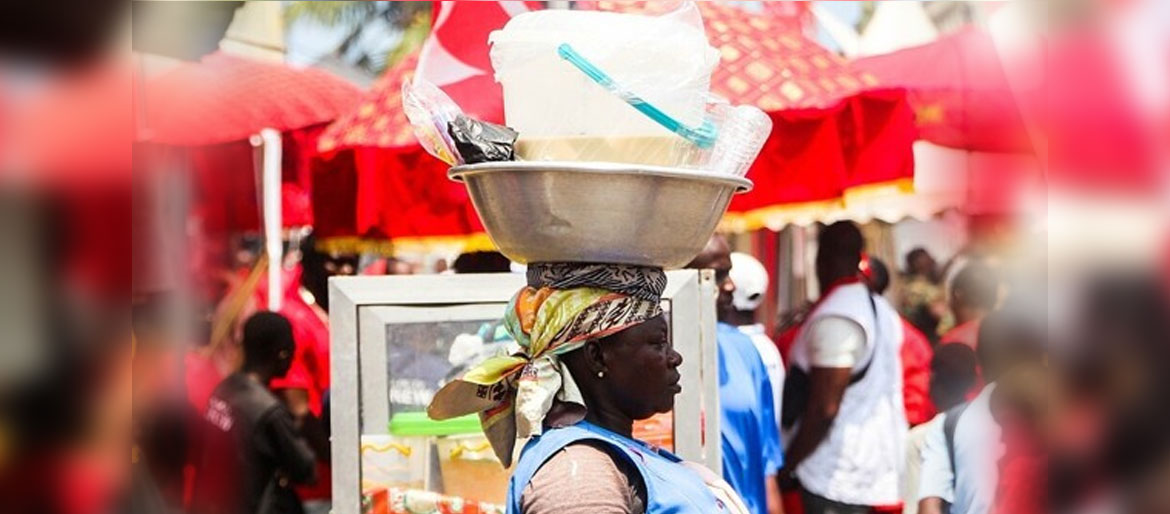
A food vendor during Homowo celebrations in Accra, linking festivals, livelihoods and visitor experience. Credit: Esthee2010 / Wikimedia Commons, CC BY-SA 4.0.

Food has already become one of the most immediate ways through which people experience Ghana. Visitors encounter the country in homes, markets, roadside rest stops, chop bars, restaurants, hotels, festivals and public events. A plate of food can bring agriculture, music, language, craft, storytelling and hospitality into one experience. This makes cuisine especially valuable to the Black Star Experience, whose wider purpose is to present Ghana’s cultural assets in ways that attract people, business and investment.
From hospitality to a recognisable national experience
Ghanaian hospitality is often expressed through the invitation to eat. In many households, offering water and food acknowledges the dignity of a visitor. At public events, meals create an informal space in which strangers converse and relatives reconnect. The national word akwaaba becomes more meaningful when the visitor is not simply shown a dish but is told its name, origin, ingredients, method and cultural setting.
The country has begun to use organised culinary showcases more deliberately. The Ghana Tourism Authority’s TASTE 69@69 event was promoted as a festival to celebrate traditional and contemporary Ghanaian dishes, highlight agricultural produce, create opportunities for food entrepreneurs and position Ghana as a food-tourism destination. [6] Such events are valuable because they bring cultural promotion and business development together. Their impact, however, should extend beyond a single day through vendor directories, filmed demonstrations, tourism packages, business referrals and regional follow-up events.
Tourism data strengthens the case for this approach. The Ghana Statistical Service recorded 888,516 inbound overnight visitors between the fourth quarter of 2022 and the third quarter of 2023, with a median stay of 12 nights. The survey specifically tracks expenditure on food and beverages as part of visitor spending. [5] Every additional meal purchased from a local restaurant, caterer, farmer or processor allows tourism income to circulate through more Ghanaian hands. Cuisine is therefore not a decorative addition to tourism; it is part of tourism’s economic value chain.
Building regional culinary routes
A stronger food-tourism strategy should encourage visitors to travel for taste, story and participation. Accra can offer guided experiences around Ga food heritage, markets, fishing communities and Homowo. Cape Coast, Elmina and surrounding Fante communities can connect coastal history with kenkey, fish processing and local stews. Ho and the wider Volta Region can combine akple, yam traditions and Asogli Te Za with kente, landscape and music. Western Region routes can include Nzema akyeke, cocoa communities and coastal fisheries. Northern routes can place tuo zaafi, tubaani, shea, grains and market culture alongside smock weaving, architecture and festivals.
These routes should not turn living communities into performances staged only for visitors. They should be designed with chiefs and queen mothers where appropriate, local assemblies, cooks, farmers, women’s groups, youth, historians, tour operators and public-health officers. Community members should determine what can be shared, how it is interpreted and how income is distributed. Training should cover food safety, visitor care, storytelling, pricing, digital booking and basic record keeping.
Hotels and restaurants also have a national role. A visitor should be able to find a well-presented Ghanaian breakfast, lunch and dinner option, not only a continental menu with one local dish added as an afterthought. Menus can identify the cultural area connected to food, explain unfamiliar ingredients and offer tasting portions. Regional sourcing agreements can connect hospitality businesses to farmers, fishers and processors, while culinary schools can teach traditional techniques alongside modern hygiene, nutrition, service and business management.
Food festivals as year-round economic platforms
Ghana’s festival calendar already offers strong entry points. Homowo, Asogli Te Za, Ngmayem and other harvest celebrations can support food fairs, farm visits, cooking demonstrations, youth competitions and heritage talks without reducing sacred customs to entertainment. December in Ghana programmes increasingly include culinary and farm-to-table experiences, showing that food can be integrated into diaspora homecoming and national tourism promotion. [14] The next step is to connect these events to measurable local benefits such as vendor sales, repeat orders, apprenticeships and new tourism products.
Food tourism succeeds when the experience is trustworthy. Clean preparation areas, safe water, transparent pricing, accurate menus, clear allergen information and courteous service are cultural as well as commercial responsibilities. A memorable taste may attract attention, but quality and consistency determine whether a visitor recommends Ghana, buys a packaged product later or returns with others.
National opportunity: Every major tourism itinerary should include at least one well-interpreted Ghanaian culinary experience connected to a real producer, market, community, festival or