
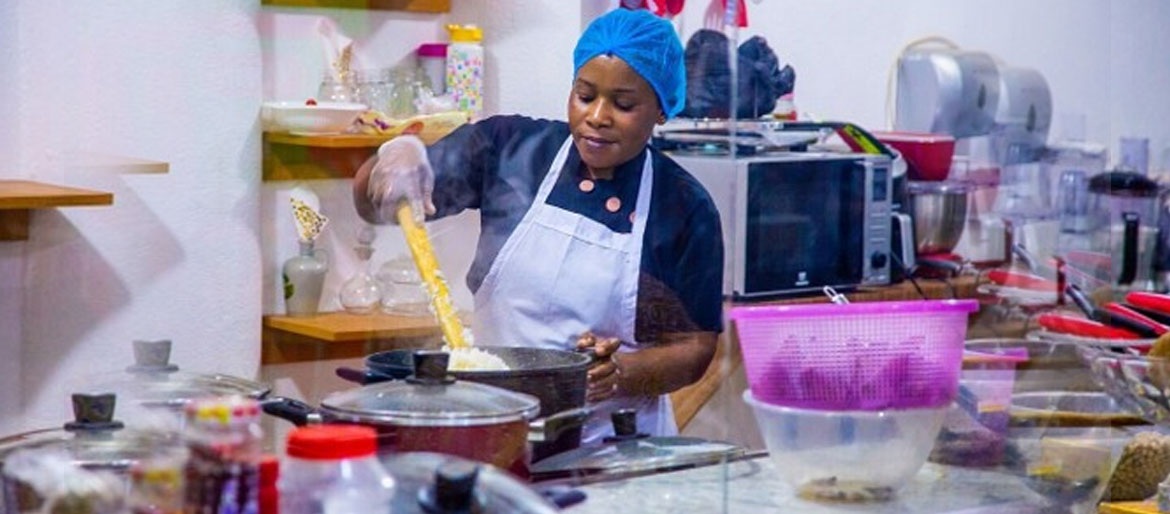
Ghanaian chef Failatu Abdul-Razak at work, representing contemporary culinary skill and enterprise. Credit: OJjnr / Wikimedia Commons, CC0 1.0.
.jpg)
Ghanaian food is one of the clearest expressions of the country’s cultural diversity and creative resilience. It preserves the knowledge of coast, forest, transition and savannah communities; it carries the memory of harvest, migration, trade and survival; and it gives material form to hospitality, family responsibility and communal celebration. From kpokpoi at Homowo and new yam at Asogli Te Za to kenkey, akple, fufu, tuo zaafi, tubaani and akyeke, food connects place, language and identity.
That heritage is already promoting Ghana. It welcomes visitors at home, appears in festivals and tourism programmes, sustains Ghanaian communities abroad and supports cultural-diplomacy events such as Goût du Ghana in Paris and international food showcases in Rabat. Ghanaian ingredients and processed foods also circulate through regional and global markets. The country therefore begins with a strong cultural product; what remains is to build a more coordinated system around it.
The national objective should not be to force every dish into one recipe or to claim exclusive ownership of foods shared with neighbouring countries. It should be to document Ghana’s particular knowledge accurately, honour the communities and individuals who preserve it, and present local variations with confidence. Standardisation is useful for safety, packaging and service, but it must not flatten the cultural differences that make Ghanaian cuisine valuable.
Food can contribute more to national development when cultural promotion is connected to agriculture, fisheries, tourism, processing, hospitality, trade, education and public health. Strong local purchasing can expand farmer markets. Storage and processing can reduce losses. Training and finance can help women and youth build durable businesses. Better packaging and regulation can move Ghanaian products into formal export channels. Culinary routes and festivals can distribute tourism income beyond major attractions.
Food Month should therefore end with commitments, not only photographs. Cultural institutions can begin the national inventory. Tourism bodies can package regional experiences. Local assemblies can support markets and community enterprises. Food and trade agencies can prepare businesses for quality certification and export. Schools and families can teach the meaning of Ghanaian foods alongside their preparation. Missions abroad can make cuisine a regular instrument of cultural and economic diplomacy.
A nation develops not only by producing more, but by recognising the value within what its people already know. Ghanaian cuisine contains knowledge, labour, identity and enterprise. When that heritage is protected and linked to modern systems of quality, investment and market access, food becomes more than something Ghana consumes. It becomes something through which Ghana educates, welcomes, employs, exports and presents itself to the world.
Final message: Eat Ghana should mean more than choosing a local meal. It should mean protecting Ghanaian knowledge, buying from Ghanaian producers, building Ghanaian enterprises and carrying Ghana’s cultural identity confidently into the world.
Sources and Reference Notes
National Commission on Culture, The Ghanaian Kitchen, 15 November 2020.
Food and Agriculture Organization, Cassava Development in Ghana.
Ghana Tourism Authority, Asogli Te Za, Asogli Yam Festival, 16 April 2025.
Ghana Statistical Service, Ghana International Travellers’ Survey, released December 2025.
Ghana Tourism Authority, TASTE 69@69, flagship food-tourism event listing.
Black Star Experience, official mission and strategy.
Ghana Statistical Service, Ghana at a Glance, food-insecurity indicator for Q3 2025.
Editorial note
The examples are illustrative rather than exhaustive. Ghanaian food names, spellings, recipes and ceremonial practices vary by language, traditional area, family and religious history. Local custodians should be consulted before applying a general description to a community or commercial product. Each figure carries its image credit. Web sou